


Book Our Lord in the Attic tickets →
Behind the ordinary facade of a 17th-century canal house in Amsterdam’s Red Light District hides an extraordinary secret: a complete Catholic church built into the attic. Our Lord in the Attic (in Dutch, Ons’ Lieve Heer op Solder) is one of the city’s most surprising museums. This guide covers the 2026 tickets and prices, the story behind the hidden church, exactly what you’ll see and how to plan your visit.
The museum is small and popular, so booking a timed ticket online in advance is strongly advised; you can also buy at the door if there is space. A good audio guide is included in the price, and under-5s go free.
| Ticket | Prijs (2026) |
|---|---|
| Volwassenen | €18.00 |
| Child (5–17) | €7.50 |
| Child (up to 4) | Gratis |
| Student (CJP / ISIC) | €11.50 |
| Museumkaart / I amsterdam City Card | Gratis |
Entry is free with a Museumkaart, the I amsterdam City Card, a Stadspas or an ICOM card — you still reserve a timed slot online. One more tip: Our Lord in the Attic is featured in our Amsterdam audio tour, which gets you 10% off at the door when you show the app.
Check tickets & availability →
The museum is open every day, which makes it an easy rainy-day plan in the centre of town. It occasionally closes early for private events, so check opsolder.nl if you are visiting late in the day.
| Dag | Openingstijden |
|---|---|
| Maandag – zondag (dagelijks) | 10.00 – 18.00 uur |
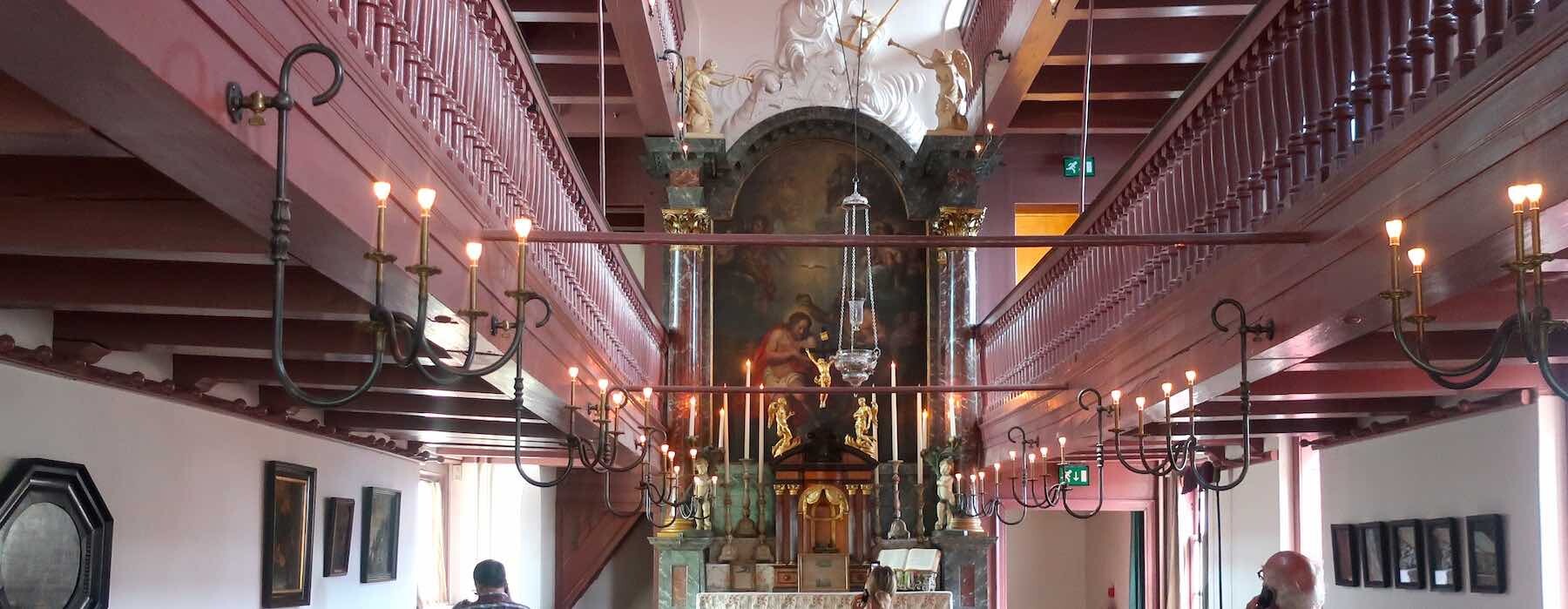
In 1578, Amsterdam switched from Catholic to Protestant rule in an upheaval known as the Alteration. Public Catholic worship was banned, so the city’s Catholics began holding Mass in secret, in homes and attics. These clandestine churches were called schuilkerken, or “hidden churches”.
In the 1660s, a Catholic merchant named Jan Hartman built a full church across the top three floors of his canal house, complete with an altar, an organ and hanging galleries. From the street it looked like any other home. Our Lord in the Attic is the best-preserved hidden church in the Netherlands, and it has been a museum since 1888, which makes it the second-oldest museum in Amsterdam after the Rijksmuseum.
More than a curiosity, it tells the bigger story of religious tolerance in the Golden Age: the authorities knew these churches existed and largely looked the other way, as long as they stayed out of sight.
You enter through a modern building and cross into the historic house, then climb a series of steep, narrow 17th-century staircases. On the way up you pass beautifully preserved period rooms, including a grand canal-house parlour (the sael), kitchens and living quarters that show how a wealthy merchant family lived.
At the very top, the house opens into the church itself: a surprisingly tall, elegant space with a pink marble-effect altar, a balcony organ and box-like galleries, lit by windows you would never guess hid a sanctuary. The included audio guide brings the rooms and the history to life as you go.
Part of what makes a visit so memorable is the setting. The museum sits on Oudezijds Voorburgwal, the oldest canal in the city and now one of the main streets of De Wallen, the Red Light District. Stepping from the neon-lit lanes into a silent 17th-century church is one of the sharpest contrasts in Amsterdam.
It also makes a perfect pairing with a daytime walk through the district, when the area is quiet and full of history rather than nightlife. The Oude Kerk, the city’s oldest building, is a two-minute stroll away.
For anyone interested in history, architecture or something genuinely unusual, yes. It is compact, atmospheric and unlike anything else in the city, and it rarely feels as crowded as the big-name museums. Most visitors spend about an hour to ninety minutes here.
One honest caveat: the historic house is reached by steep, narrow original staircases, so it is not suitable for visitors with limited mobility, and it can be tight for pushchairs. If that is a concern, contact the museum before booking.
The entrance is at Oudezijds Voorburgwal 38, 1012 GD Amsterdam, about a five-minute walk from Amsterdam Centraal through the edge of the Red Light District. See where it sits on our map of Amsterdam.
Our Lord in the Attic (Ons’ Lieve Heer op Solder) is a museum in a 17th-century Amsterdam canal house that hides a complete Catholic church in its attic. It was built in the 1660s, when public Catholic worship was banned, and is the best-preserved “hidden church” in the Netherlands.
Adult tickets are €18, children aged 5 to 17 pay €7.50, and under-5s go free. Students with a CJP or ISIC card pay €11.50, and entry is free with a Museumkaart or I amsterdam City Card. The audio guide is included.
Most visitors spend about an hour to ninety minutes. The route climbs through period rooms to the hidden church at the top, and the included audio guide sets the pace. It is easy to combine with a walk through the surrounding old centre.
It is at Oudezijds Voorburgwal 38, on the oldest canal in Amsterdam, right in the Red Light District (De Wallen). It is about a five-minute walk from Amsterdam Centraal and two minutes from the Oude Kerk.
Yes. Entry is free with a Museumkaart, the I amsterdam City Card, a Stadspas or an ICOM card. You still reserve a timed-entry ticket online for your chosen slot.
Yes. Our Lord in the Attic is a hidden Catholic church tucked into a canal house in the middle of the Red Light District, and the nearby Oude Kerk is the city’s oldest church. The contrast between the quiet church and the lively district is one of the area’s surprises.
For history and architecture lovers, it is one of the most unusual and rewarding small museums in Amsterdam. It is less crowded than the big museums and genuinely one of a kind. If you only want famous paintings, the Rijksmuseum or Van Gogh Museum may suit you better.
There is no strict dress code. It is a museum rather than an active parish church, but it is still a former place of worship that occasionally hosts services, so dressing respectfully is appreciated.
The historic house is reached by steep, narrow original staircases and is not suitable for wheelchairs or those with limited mobility. The modern entrance building is accessible; contact the museum in advance if you have access needs.
Photography without flash is generally allowed. Some areas or temporary displays may restrict it, so watch for signs or ask staff.
Last updated: October 2026 by the Tours in Amsterdam editorial team. Prices, opening hours and details are taken from the official museum website (opsolder.nl) and can change — always confirm before booking.
Reserve a timed ticket for this unique hidden church: book Our Lord in the Attic tickets online. Tickets are also sold directly on the museum’s website.